PART ONE
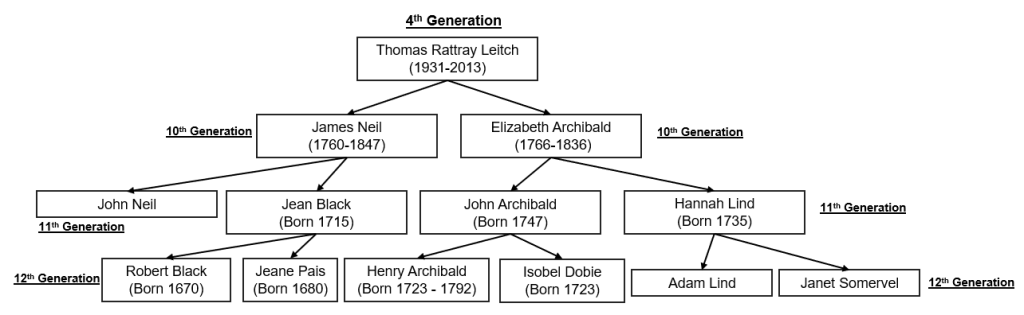
10th-12th Generation
Through DNA testing I can once again confirm my research. The records led me to John Neil and his parents, James and Elizabeth. This takes me back 10 Generations, to over 250 years ago. It also confirms that the information I detailed earlier is legally and genetically correct.
I know those reading this will know the name Jeannie McNeill (1893-1954). Her grandfather was born Archibald Neil in 1822. In the span of his lifetime, the name changed to McNeill. I couldn’t understand why they would change their name, and I spent considerable time trying to research this – and it seems that it was fashionable! As Mc or Mac is “son of” in the Gaelic language, they believed they weren’t changing their name only altering it.
10th Generation – James Neil & Elizabeth Archibald
James Neil was born on 25th December 1760 to John Neil and Jean Black. James wasn’t born on Christmas day because celebrating Christmas was frowned upon then. Before the Reformation in 1560, Christmas in Scotland had been a religious feasting day. Then, with the powerful Kirk frowning upon anything related to Roman Catholicism, the Scottish Parliament passed a law in 1640. This law made celebrating ‘Yule vacations’ illegal. The baking of Yule bread was made a criminal act! Even after Charles II was restored to the throne, celebrating Christmas was frowned upon in Scotland for a long time. It wasn’t until 1958 that 25 December became a Scottish public holiday.
James married Elizabeth Archibald on 5th May 1786 in Tranent

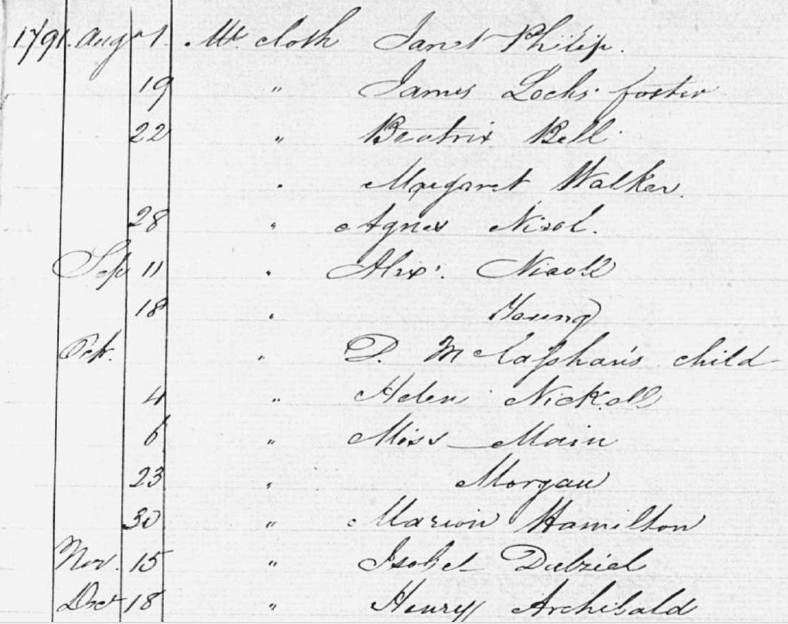
He lived a long life. In the 1841 census, he is recorded as 80 years old and working as a coal miner. He was still working down the pits at 80 years old! James is detailed on the right-hand side of the record below. If you look close enough, you will see he was surrounded by Neil/McNeil’s. They all lived in the “Raws”.
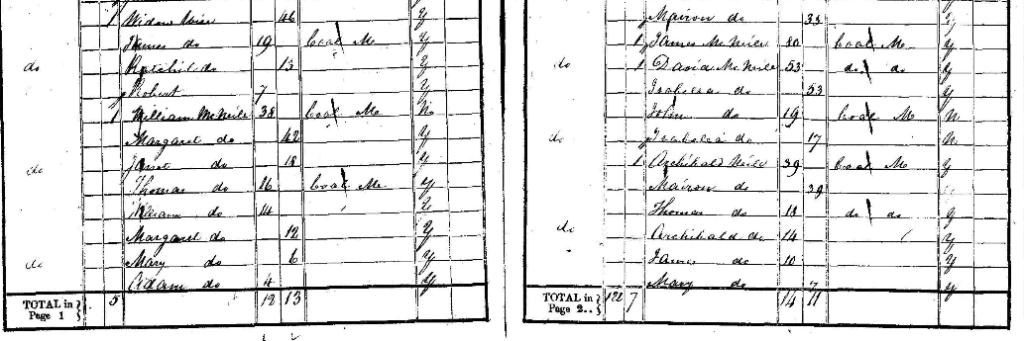

James died on 2nd December 1847 and is buried in Tranent Churchyard. The note on his gravestone reads – James Neil, collier in Tranent. He died of old age, on that 1 page of death notices in Tranent there are 3 Neil/McNeill listed. He lived, and died with family all around him. His wife Elizabeth also lived to an old age, dying at 82.

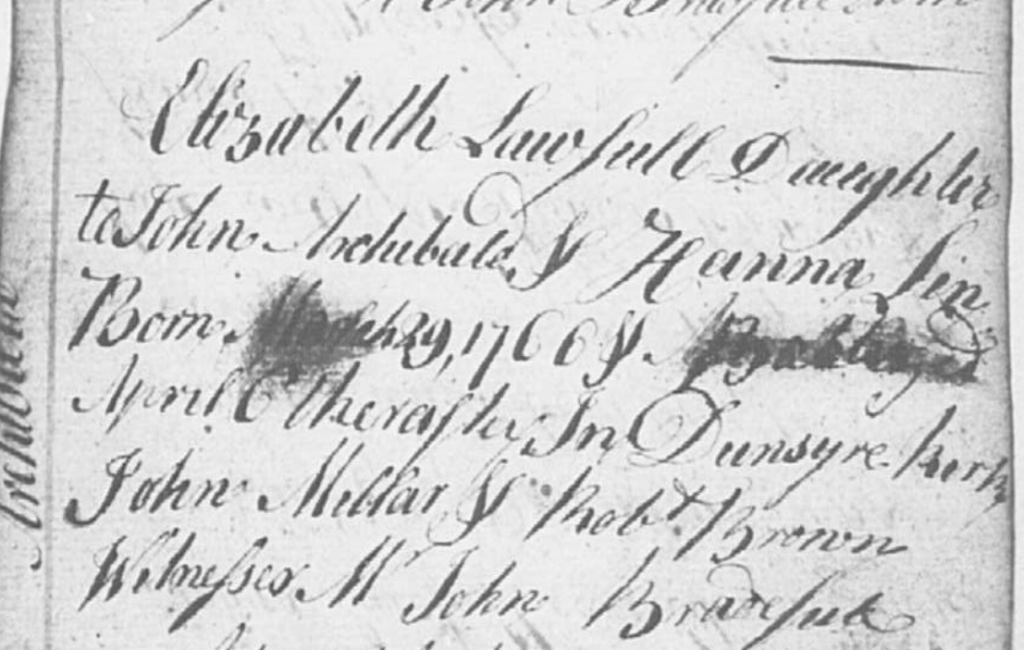
Elizabeth Archibald was born to John Archibald and Hanna Lind on 6th April 1766. Elizabeth was born in Dunsyre, which is some 30 miles from Tranent. Other family records show they moved to Tranent when she was a baby. She had her children in Tranent and lived the life of a Coal miner’s wife.
11th Generation
John Neil & Jean Black
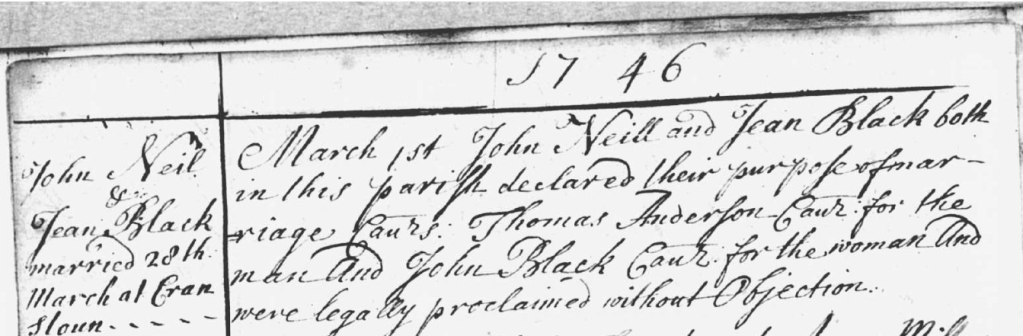
Unfortunately, I have no record of John before he married Jean Black in 1746 in Dalkeith. Dalkeith was the main administrative centre for Midlothian at this time and was a busy place. We have accounted for the Irish part of my Di’s DNA therefore John mostly likely was Scottish and in the area for work
One of the oldest buildings in Dalkeith is on the High Street, the Tollbooth. It was used for the administration of the town in the early 18th century. The plaque above the door reads ‘1648’. Although the building was reconstructed in the early 18th century, it incorporated prison cells in the basement, a weigh house on the ground floor and a courtroom on the first floor. In front of the building there is a circle of stones to mark the spot where the last public hanging in Dalkeith took place.
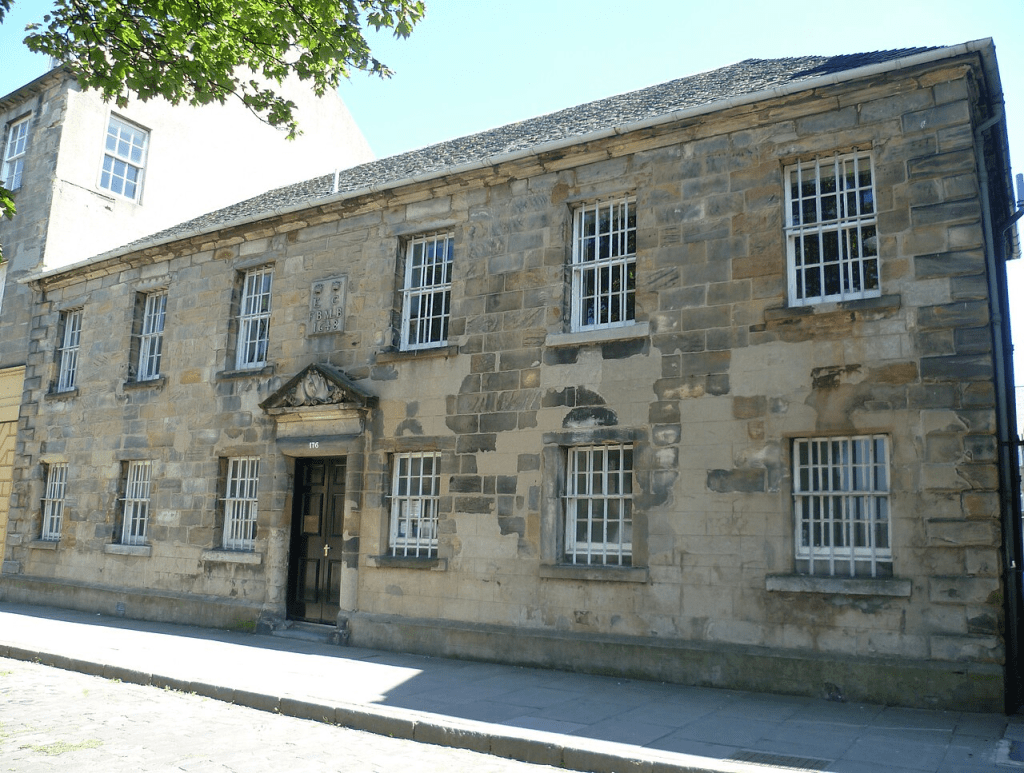
John and Jean had 4 children. Jean, John, George & James. John was the first child born in Tranent in 1757. His sister Jean was 10 years older and was born in Inveresk. Where their mother was born.
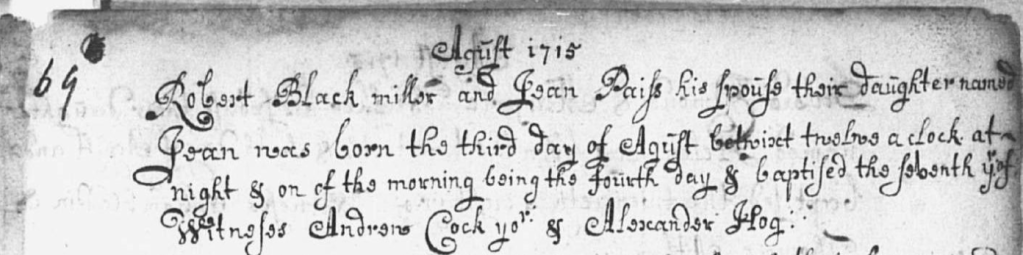
Jean Black was born on the 4th August 1715, In Inveresk Midlothian. Her father was a Miller and her mother is called Jean Paise. Records show they married in Dalkeith, moved back to where Jean’s family was, and finally settled in Tranent.
John Archibald & Hanna Lind
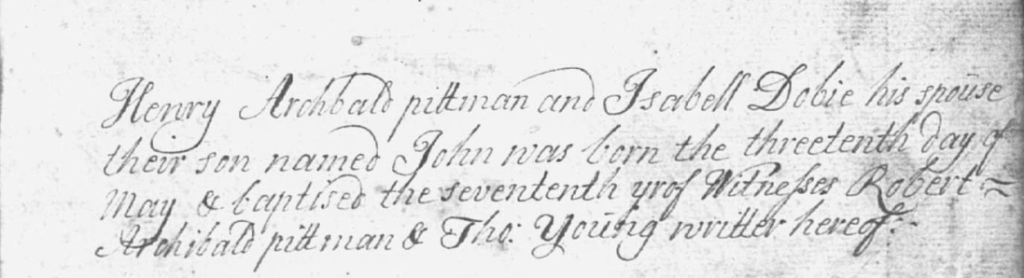
John was born on 17th May 1747 in Inveresk to Henry Archibald and Isobel Dobie. His father is recorded as a Pittman.
By the 16th and 17th centuries, history had made its mark on the village of Inveresk. In 1650, Oliver Cromwell established headquarters at Inveresk House. Charles Edward Stuart, the Pretender to the British Throne, visited it around 1745.
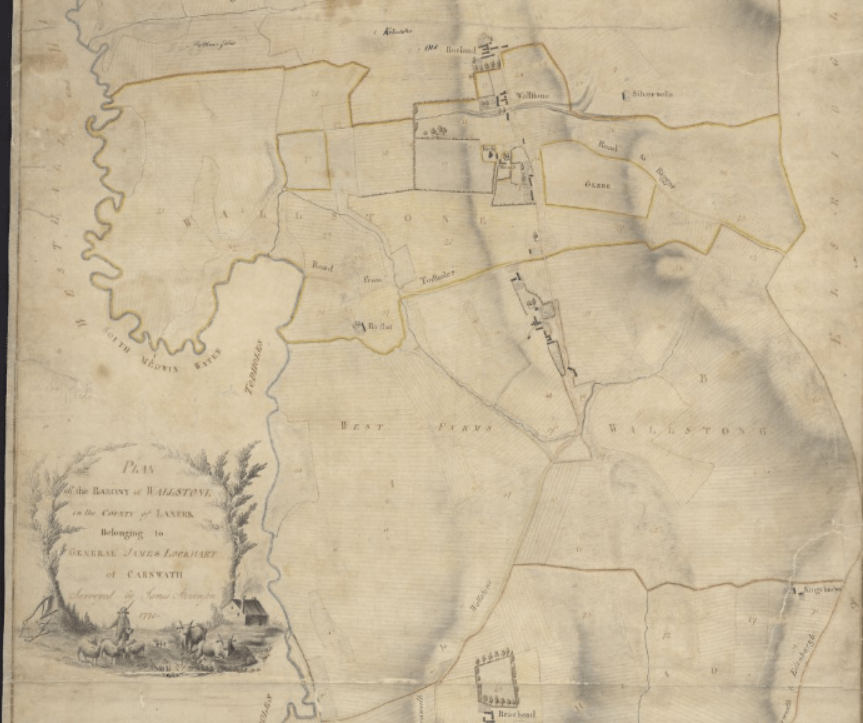
John married Hannah Lind in August 1759 Walston. Hannah was born in Walston in 1735 to Adam Lin and Janet Somervel.
This map of Walston shows just how rural life was for them.

12th Generation
Robert Black & Jeane Pais
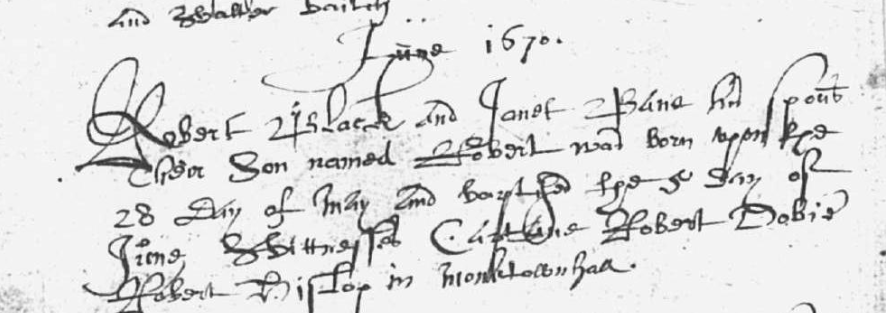
Robert was born on 28 May 1670 to Robert Black and Janet Bane, the birth was registered in Inveresk. His sister Margaret followed in 1672, then John in 1675, William in 1677 and James 1679. Inveresk runs deep in this family as 5 generations later, in 1822 they are still living there.
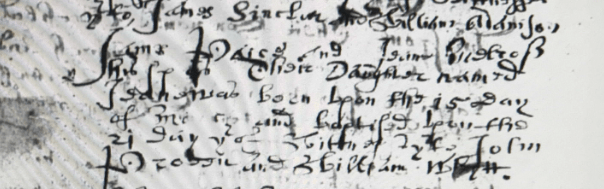
Jeane was also born in Inveresk. She was born on the 21st March 1680 to James Paice and Jeane Melrose.
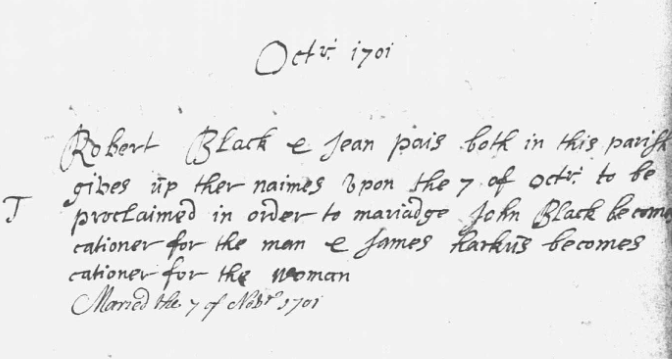
Robert and Jeane were married on 7th November 1701 in Inveresk. Robert was a Miller. Millers jobs were to grind grain and cereal crops into flour to be used in baking.
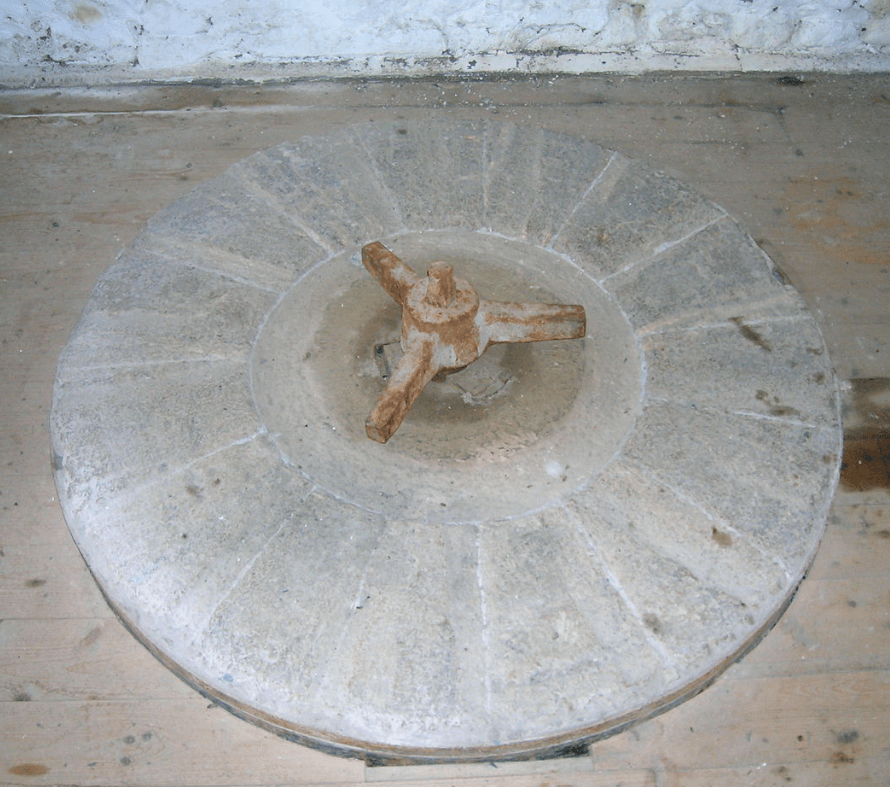
During the medieval period, Millers tended to run town mills, which were usually included in almost every village. Initially, Millers used something called “quern-stones” to grind grains into flour. Millers were most famous for short-weighting or overcharging the toll owed them for the use of the mill.
Henry Archibald & Isobel Dobie
Henry was baptised in Liberton, Midlothian to John Archibald and Isobel Henderson on 4th August 1723.

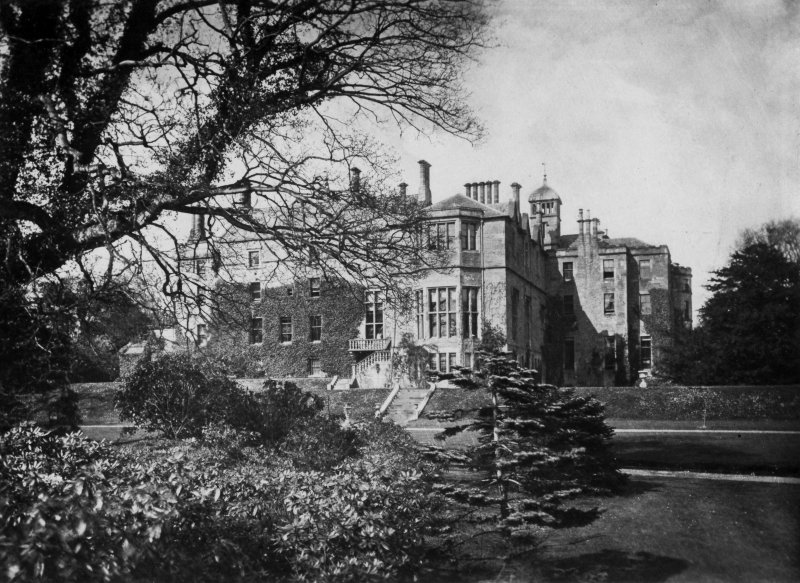
The certificate also states that the family lived in Niddrie, this was part of Liberton. The Wauchope family owned the majority of the area, they lived in the house. The land was mainly farm land and Niddrie was a farm town.
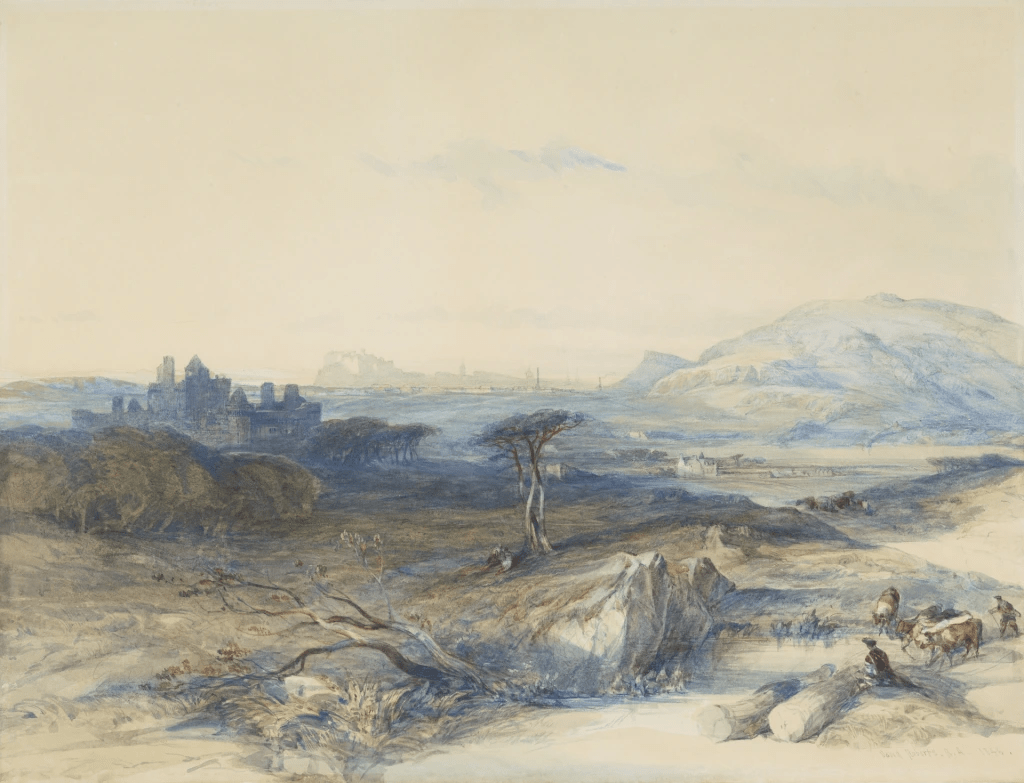
David Robert’s Craigmillar Castle (1846) depicts a large swathe of countryside on which Craigmillar and Niddrie now stand. Typical of the period and romantic style, it depicts the area as rugged, agricultural and natural. (Can you see Arthur’s Seat in the background?)

Henry married Isobel Dobie on 4th July 1746 and they had 12 children. Isobel had been born in Newton to John Dobie and Elspeth Moffat in 1726.

Henry died in 18th December 1792 in Newton Village aged 68. Records state that Henry was a Pitt man. He wasn’t a Pitt man as in a coal pit but a timber pit. A saw pit is a pit over which timber is positioned to be sawed with a long two-handled saw, usually a whipsaw, by two people, one standing above the timber and the other below. It was used for producing sawn planks from tree trunks, which could then be cut down into boards, pales, posts, etc.
The majority of land was occupied by the fields of Newton Farm bounded by the River Clyde to the north. There was also a small country estate centred around Newton House. It dates from the 1600s as part of Clan Hamilton.
Adam Lind & Janet Somervil
Adam and Janet had 6 daughters,
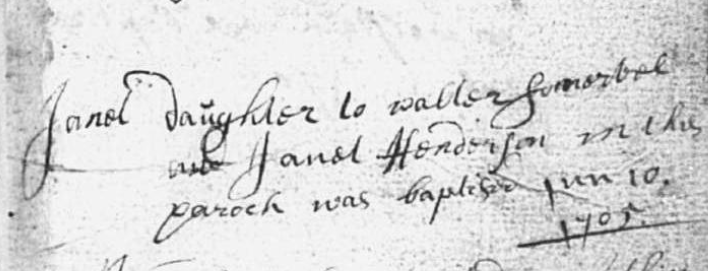
Finding Janet’s birth certificate of 1705 states her parents were Walter Somervill and Janet Henderson and they were living in Walston.
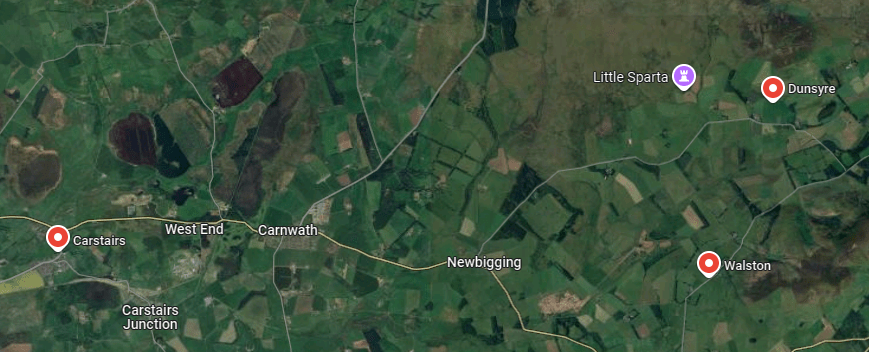
Records show that Adam was from Carstairs, I have shown some images of the area to show how close the villages were and how far their descendants travelled.

I have found this part of my family very informative. They must have been god fearing/law-abiding people to have so much information documented at a time when it wasn’t required. I have split this story into 2 parts. This will allow me time to research this family in more depth. It covers a period of time that many do not have proven links to. It will take this family back to the 1600s.
Part 2 to follow….
 Marie's Genealogy