10th-14th Generations

Ne Obliviscaris”
Latin for “Do Not Forget”
(Pronuciation : NAY ob lee vis KAR iss)
I can once again confirm my ancestry by DNA, this time to David Campbell 9th Generation of my updates and my first link to a Scottish clan. Taking time to read these updates proves that today we are still using the clan motto and are not forgetting those that came before us.
History shows that David was a miner and came from a line of miners, Fife miners. The table below is the names of the 5 generations I have tried to cover over a 200 years period (you may need to refer to this a few times whilst reading this update)
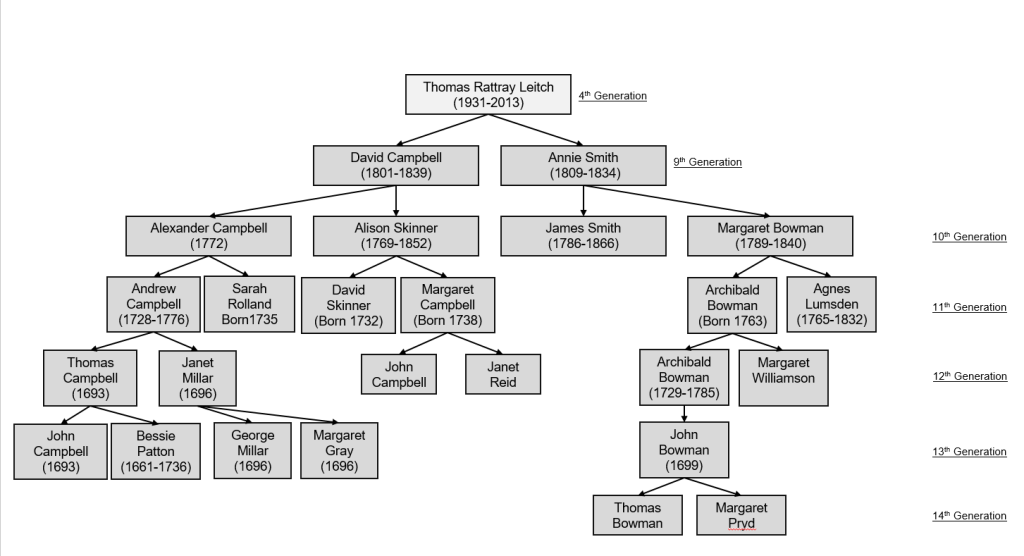
10th Generation
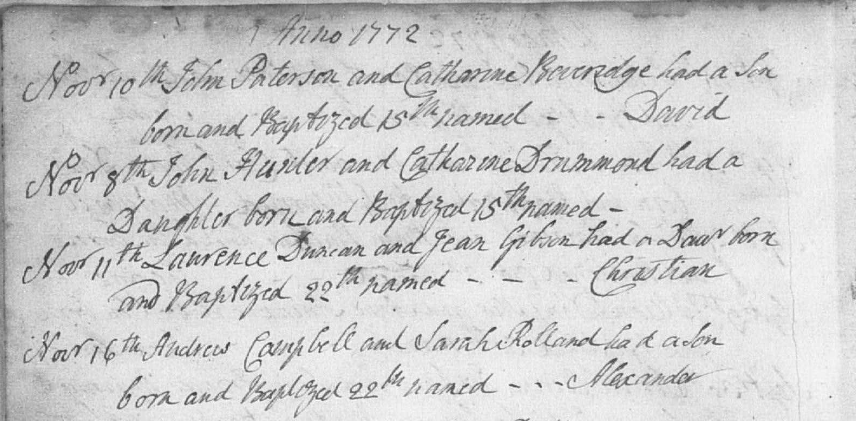
David’s Father, Alexander Campbell, was born on the 16th November 1772 in Torryburn, Fife. His parents were Andrew Campbell and Sarah Rolland. The last entry on the document below is Alexander’s birth record.
Torryburn lies on the north shore of the Firth of Forth and is one of a number of old port communities that used to serve Dunfermline. It lies in the Bay of Torry in south west Fife. Lilias Adie made Torryburn famous by being buried a witch some 70 years earlier in 1704. Lilias died in prison, it is presumed as a result of torture for practicing witchcraft, she was accused of having sex with the devil and tortured until she confessed. She was buried on the shore of the village in 1704 (This would have been very recent history to Alexander). Her resting place was under a huge sandstone slab that was supposed to prevent the devil from gaining access. This grave is the only known grave of an accused witch in Scotland as the majority of witches were burned. Various people have researched her over the years and is very much worth a google search.
Alexander married Alison Skinner and had 6 children – Andrew, David, Alexander, Margaret, Sarah and then another Margaret. Torryburn grew quickly due to coal mining in the 19th century and is an early example of a colliery pumping engine that James Watt designed. The colliery pumping engine was used in Torryburn from 1778 and coincides with coal mining in this branch of my family. Alexander was a coalminer, as were his children after him.
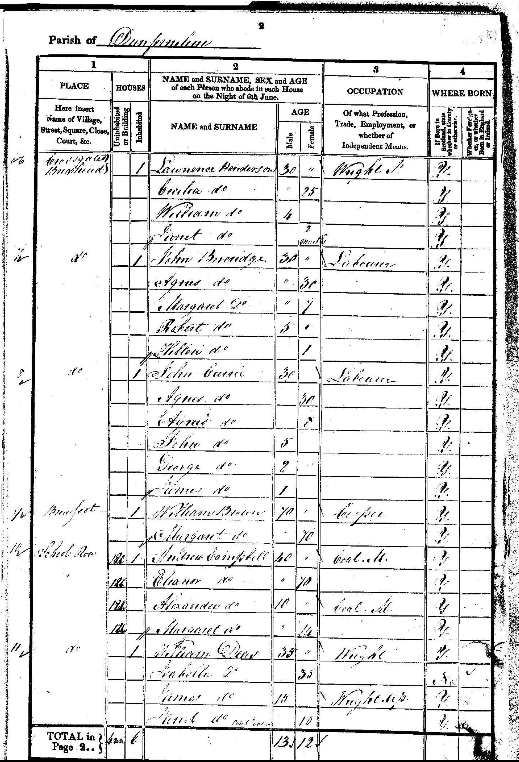
The census record of 1841
From the census you can see that Crossgates was a small town, streets had basic names – Braehead, Braefoot and School wynd
Alison had been born in Wemyss on 5th February 1769 to David Skinner and Margaret Campbell. It is likely that the family moved to Torryburn for coal mining. Alison died in 13th July 1852 in Crossgates, Fife, another Coalmining area – she was 83 years old and lived with her son and grandchildren in the last few years of her life.
David Campbell’s (9th Generation) wife Annie Smith also came from a coal mining background, her father James Smith married Margaret Bowman in Dunfermline in 1805, he was also a coal hewer. They had 6 children along with Annie, all of which lived a miner’s life. Margaret was also born in Halbeath in 1789 – into the coal mining community. This is generations, upon generations, of miners.
11th Generation
When I take a step to the next generation I find that Andrew Campbell was born on 23rd September 1728 in Kilrenny, Fife to Thomas Campbell and Janet Miller. Kilrenny is a very small village on the East Neuk of Fife and may well be the oldest settlement in this area – there is no record of coal mines in this area, this would have been a farming and fishing community. The population was very small and the likelihood of the move, to Dunfermline and then Torryburn, would have been for work. Coal mining had been happening for many years across Scotland but this is the time when it would have been expanding and many young people would have seen it as guaranteed wages. Leaving the farming and fishing areas behind to earn money in more industrial surroundings. These people/families moved 35 miles for work and although that doesn’t seem that long they would see very little of the people they left behind.
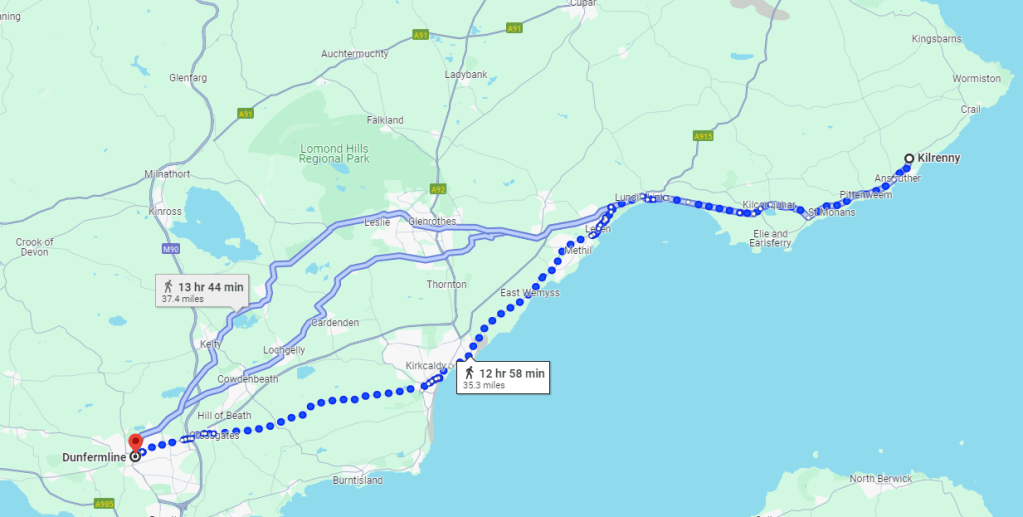
Andrew had already moved from Kilrenny when he married Sarah Rolland on 21st November 1760 in Dunfermline.

Andrew and Sarah had 7 children – John, Sarah, Thomas, Janet, Sarah, Alexander, Andrew. The certificate below is John’s (The eldest) birth certificate which shows at the time of his birth his parents were living in Halbeath and Andrew was working at the Buckyburn colliery. This colliery was still working in 1856 (almost 100 years later) but by 1897, when maps were drawn up, nothing remained.

Andrew died on 26th August 1776 aged 47 on the Craigflower Estate, Torryburn Fife. They had been married 16 years, this is sadly the average age of a coal hewer during this time. The current house on the Craigflower estate dates back to the 17th century, the house at this time was owned by the Colville family and they would have opened their lands up for coal mining to make money. The Craigflower estate colliery falls under the Halbeath coal mines like all other coal mines of the area. Andrew would have been sent to whatever colliery he was told to go to.

Also from this generation I can trace Annie Smith’s maternal side to Archibald Bowman and Agnes Lumsden who were married in 1786 in Halbeath – they were also living and working in Halbeath coalmining community.
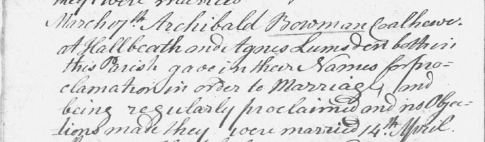
This is another couple that were from Fife!
The third couple of this generation I researched was David Skinner and Margaret Campbell. They married in Markinch in 1757, both were born in Markinch 1732 and 1738 respectively.
Markinch is known as the ancient capital of Fife, it preceded Cupar as Fife’s place of warranty and justice prior to the 13th century. Fife’s early medieval place of legal assembly is listed as Dalgynch in early Scottish law books and charters. The original site of Dalginch is now believed to have been on the cemetery mound at Northhall, 500m northeast of Markinch Church. This has led to Markinch’s designation as “The Capital Place of Fife”. (I am unsure when Dalg’inch’ become Mark’inch’).

12th Generation
The connection to Fife is strong in this family line and in Torryburn it goes even further back as the 12th generation, Thomas Campbell was born 28 March 1693 in Torryburn (He would have been an 11 year old boy when the witch trial was taking place in 1704). Janet was born in Dunfermline. It does make me wonder if Andrew would have felt like he was returning to his roots moving back to Torryburn, even if it was for work, as it was back to where his father was born and other family members still lived. Records show there were many Campbells in this area.

Thomas married Janet Miller on 24th October 1719 in Kilrenny, Fife (that’s over 300 years ago!) and had their children in Kilrenny even though they both came from Dunfermline area. I have been unable to find any reference to coal in Kilrenny and no record of why Thomas and Janet would have moved there before getting married. Interestingly the marriage certificate states they gave half a crown to the poor on their wedding day. None of the other marriages of this time state this. I’m unsure why they would do this, but it would suggest that they weren’t of the poor population.
Kilrenny is part of the Anstruther Wester Parish and in 1755 had a population of 1348, 1.6% of the population of fife. In 1961 the population of Kilrenny was only 0.7% of the population.

Janet was born in Dunfermline in 1696 to George Miller and Margaret Gray, Janet’s sister Margaret also married and at some point moved from Dunfermline to Torryburn. Margaret died in 1748 which means that her sister lived her life nearby, I’d like to think they were close.
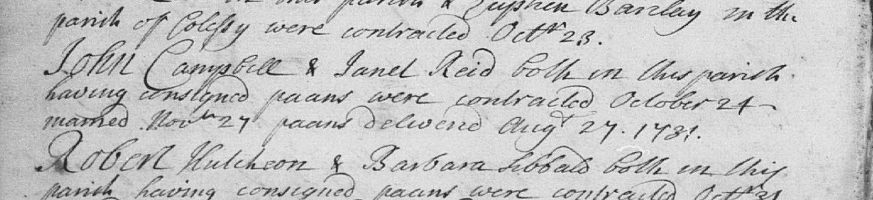
The certificate below is from 1738 in Markinch, it states “John Campbell and Janet Reid in the Cotton of Kirkforther had a child born January 12 and baptised 15th called Margaret witnesses John and William Campbell”.
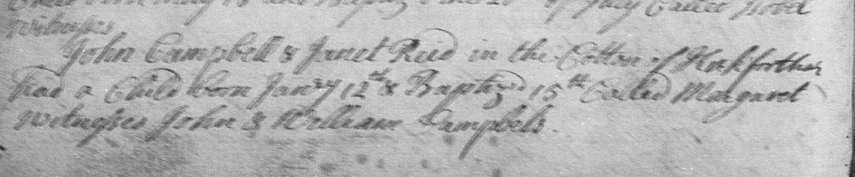
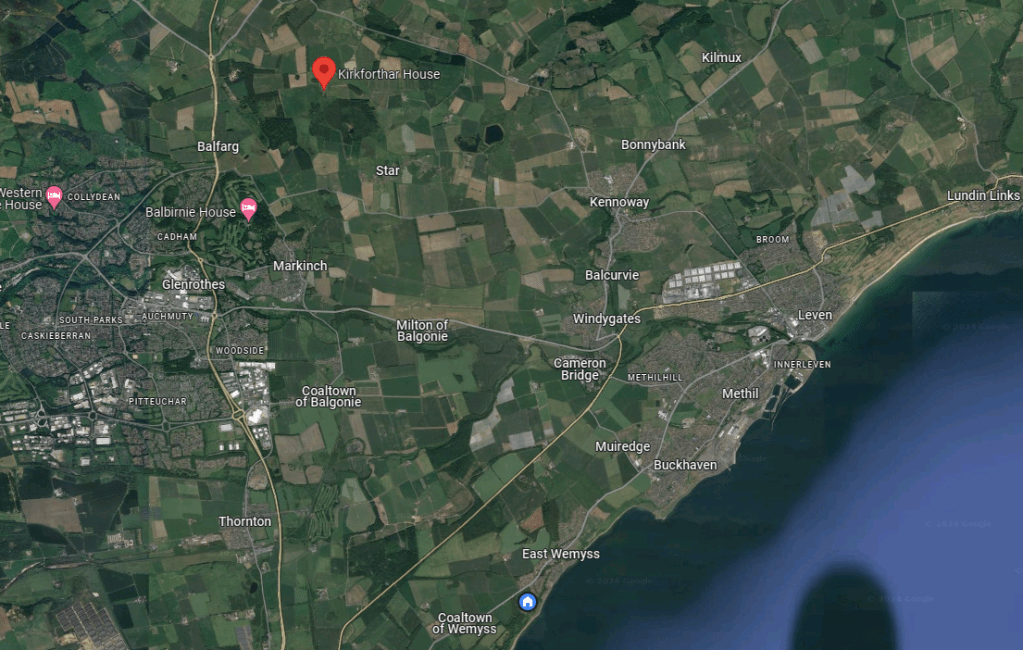
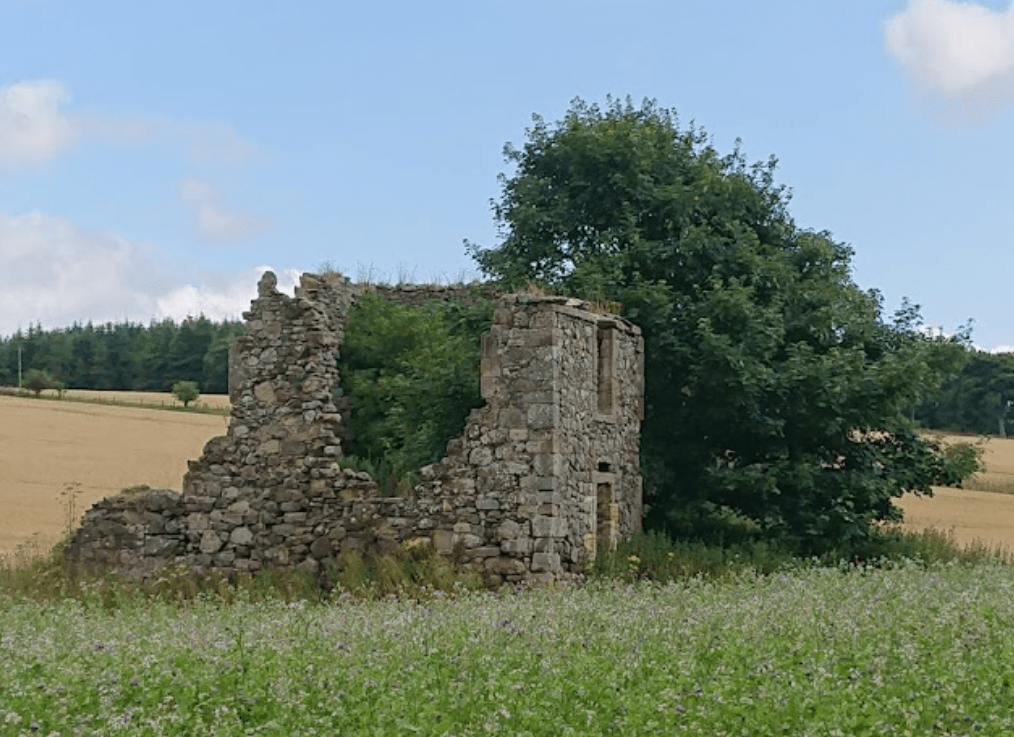
John worked, possibly run the cotton field in Kirkforthar, a farming area that falls under the parish of Markinch. This is a very small area, in 1747 there was only 1 death recorded in the area, none in the years just before or after. The death was a Campbell and the birth above is a Campbell. This strengthens my thoughts of it being family run. Only laird etc had land in these times. The picture below is of Kirkforthar house, a ruin now but it would have been a magnificent building when John and Janet lived there.
Researching the maternal side further I uncovered that Archibald Bowman’s father was also Archibald, the birth certificate of his brother John shows that Archibald was working as Coalhewer in the Urquhart pit in Lochgelly (yes we are still miners) . Archibald is buried with his son John in Dunfermline. His burial records state he was he was born on 11 November 1729 in Methil and died 4 December 1785 in Dunfermline aged 56. He married Margaret Williamson on 12th June 1755.
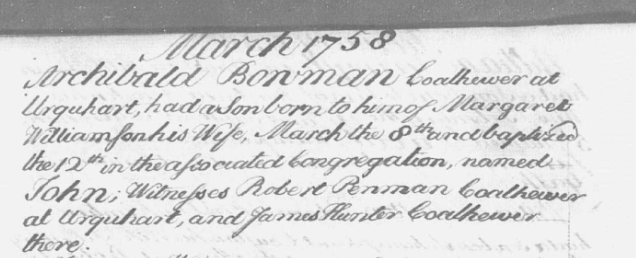
The Urquhart pit, Lochgelly was in use between 1703 ad 1792
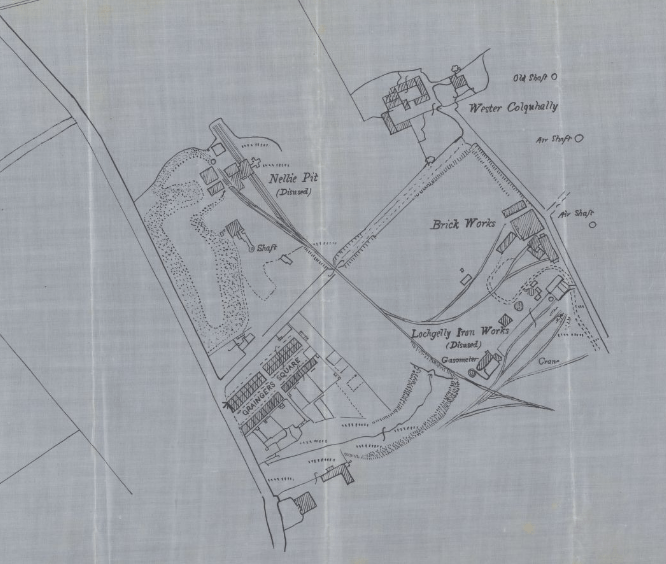
The population of the parish in the 1750s was 612. Potatoes, turnips, and hay are grown along with wheat, barley, peas, beans, and oats. The Fife breed of black cattle is raised. Coal and limestone are both quarried. The parish church was built in 1789. About half of the population is dissenting or seceding Presbyterians and there is a dissenting meeting house at Lochgelly. There are 12 ale houses in the parish (for 612 people including children this is a high percentage when most public houses didn’t allow women)
13th Generation
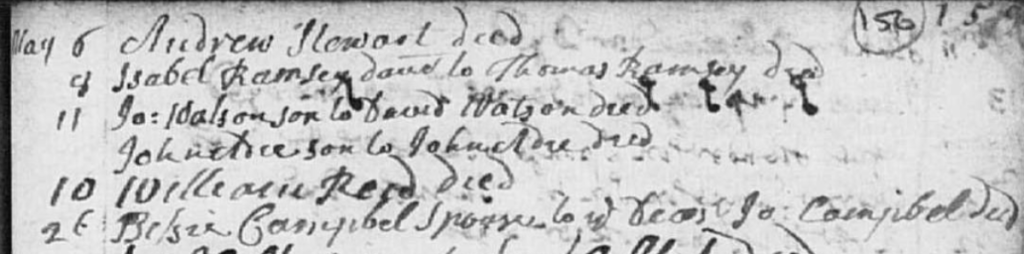
As we get a generation further away we reach the 1600s and once more I struggle to find many records. What I did find was Betsie’s death certificate. She died in 26th May 1736, she was married to John Campbell. There are many records around that time for these names making me unable to confirm any more of the details and go further back. This record does however have a title before John Campbell.
Many have written that this John is John Campbell, laird of Torrie and descendant to the Clan. This record does prove John had a title therefore even if he wasn’t the laird he would be a relation and confirming the connection to the Campbell Clan. Below is a snippet of life in the Campbell clan at this time .
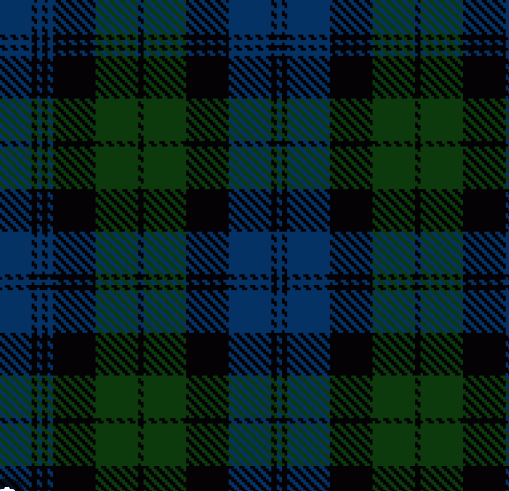
Jacobite rising of 1715
“During the Jacobite risings of the 18th century the Clan Campbell supported the British-Hanoverian Government. On 23 October 1715, chief John Campbell, 2nd Duke of Argyll learned that a detachment of rebels was passing by Castle Campbell, towards Dunfermline. He sent out a body of cavalry which attacked the rebel party and defeated it in what is now known as the Skirmish of Dunfermline and took a number of prisoners, taking only light casualties.[ A month later the British Government forces, including men from Clan Campbell, fought and defeated the Jacobites at the Battle of Sheriffmuir in 1715. However, there were in fact a small number of Campbells who took the side of the Jacobites led by the son of Campbell of Glenlyon whose father had commanded the Government troops at the Massacre of Glencoe against the MacDonalds 22 years earlier. These two families then settled their differences and swore to be brothers in arms, fighting side by side in the Sheriffmuir. However, the British Government forces led by chief John Campbell, 2nd Duke of Argyll defeated the Jacobites”
Lilias Adie wasn’t the first witch to stand trial from Torryburn – Grissell Anderson, Agnes Broun, Margaret Cowie, Margaret Dobbie, Elspeth Guild, Margaret Horne, and Christian May became known as the ‘Seven Witches of Torryburn’. Commissions for them to go to trial before the Privy Council of Scotland were issued on 8 September 1666. These weren’t witches just normal women. There are stories of witches, clans, Jacobite wars in all of Scottish History and folklore but this is a time our ancestors lived in.
Further along the coast, still in Fife, David Campbell registered his son’s birth in Wemyss, even though he lived in the neighbouring parish of Markinch.

It reads “David Campbell a stringer. had a son baptised 9th July was begotten in fornication (married after conception but before birth) to Margaret Murie the child is called John Campbell”. Margaret Murie was born in Wemyss on 9th November 1665 to Jon Murray and Bessie Henderson, they way have went to live with her parents nearer the end of her pregnancy. A Stringer was a maker of rope or strings, and especially those for longbows used for both hunting and war.
14th Generation – John Bowman
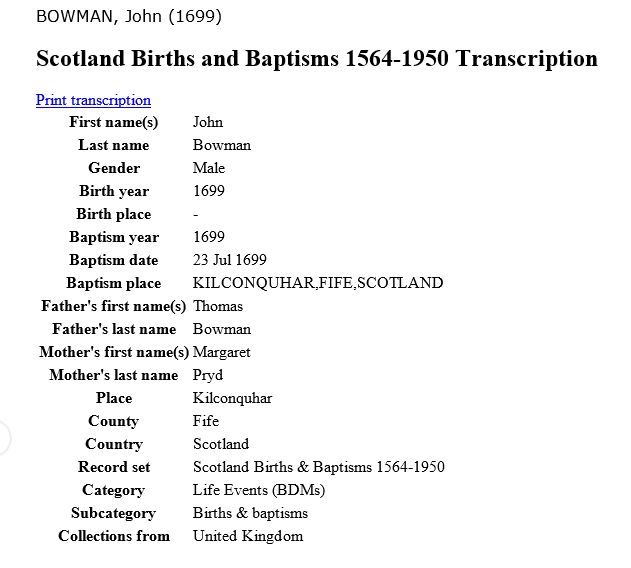
And just for the Fifer in me I can confirm that the Bowman’s have also stayed in Fife as John Bowman was born in 1699 in Kiconquhar, Fife to Thomas Bowman and Margaret Pryd (Transcript below)
 Marie's Genealogy