3rd Great Grandfather
7th Generation
Born - 20th August 1822, Gorbals, Glasgow
Died - 28th February 1895, Barnhill Poorhouse
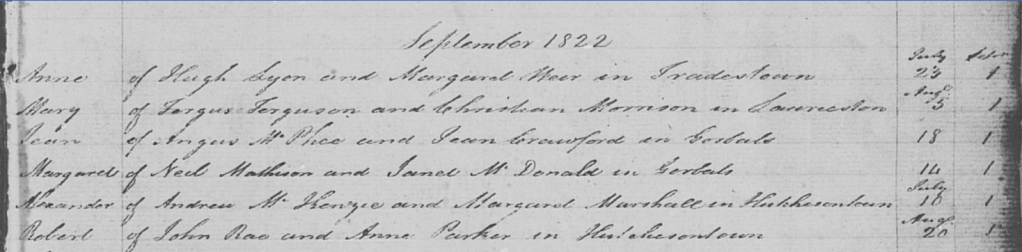
Robert was born to John Rae and Ann Parker in the Gorbals, Glasgow in 1822. His father was a Baker. His parents were married in Ayr then moved to Kirkcudbright before moving, and settling in the Gorbals. In the 19th century, much of Scotland was transformed by the industrial revolution. However Ayr did not become a manufacturing centre therefore I would presume they moved around for work.
The 1800’s represented the dark ages of British baking where dodgy practices ruled as bakers worked near 24 hour shifts in horrendous conditions and still could not make a living. The average baker died by the age of 42. The harsh conditions lead to a bakers revolt and the founding of The Bakers Union (which still exists today).
Robert was one of 10 children. The eldest brother John Parker Rae was born in 1811 in Ayr and followed in his father’s footsteps he also became a Baker. His sister Margaret was also born in Ayr the following year.
Ann Rae was the only child born in Kirkcudbright. She was born 1816, Kirkcudbright is south of Ayr on the west coast of Scotland but within 3 years they were living in Gorbals.
The Gorbals had a population of 5000 in 1800, and had swelled to 36,000 by the time it was annexed by Glasgow in 1846. At this time Gorbals Cross was still a cluster of buildings many dating from the seventeenth century but the old baronial dwellings had been subdivided into festering slums and the back lands were breeding grounds of squalor. This situation worsened when Gorbals became one of the favoured settlement areas for the impoverished Irish immigrants who poured into Scotland from the 1840s.
Out of Robert’s siblings the following were born in the Gorbals – Agnes was born in 1819, James in 1821, Jane in 1826, Thomas in 1828 and William in 1830. Therefore the family were living in the Gorbals before the immigrants arrived.
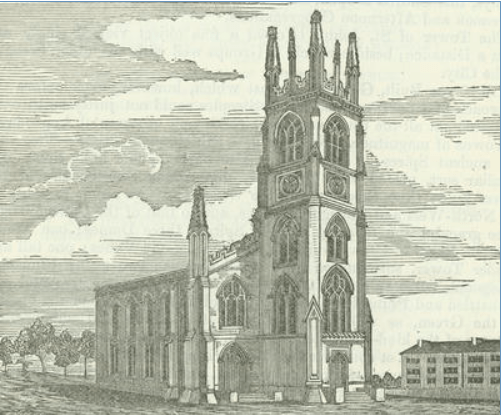
The foundation stone of St John’s Parish Church was laid in 1817 The building, situated at the end of MacFarlane Street fronted the Gallowgate, It could hold up to 1580 parishioners in one of the poorest areas of the city.
During its construction the foundations collapsed sparking fears that the 138 feet high Gothic tower would not be able to support the weight of the full compliment of bells which were envisaged for the church. Only the Church of St Andrew in Edinburgh could boast a complete “Ring of Bells” at this time.
Above is St John’s, I believe it is the church they would have attended and registered the children’s births. The image below is of the 1841 census which shows the family lived in Gallowgate, St Johns – 1.5 miles from the Gorbals. It shows that by 1841 Robert had already lost his mother as his father was living in a room with 7 of his children – John, Agnes, Robert, Jane, William, Janet and Thomas. Margaret and Ann were no longer living at home (I have no records to as to where they were). Unfortunately one Thomas has died and a younger sibling was then named Thomas.
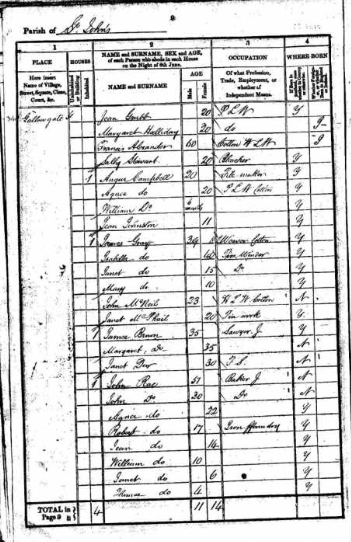
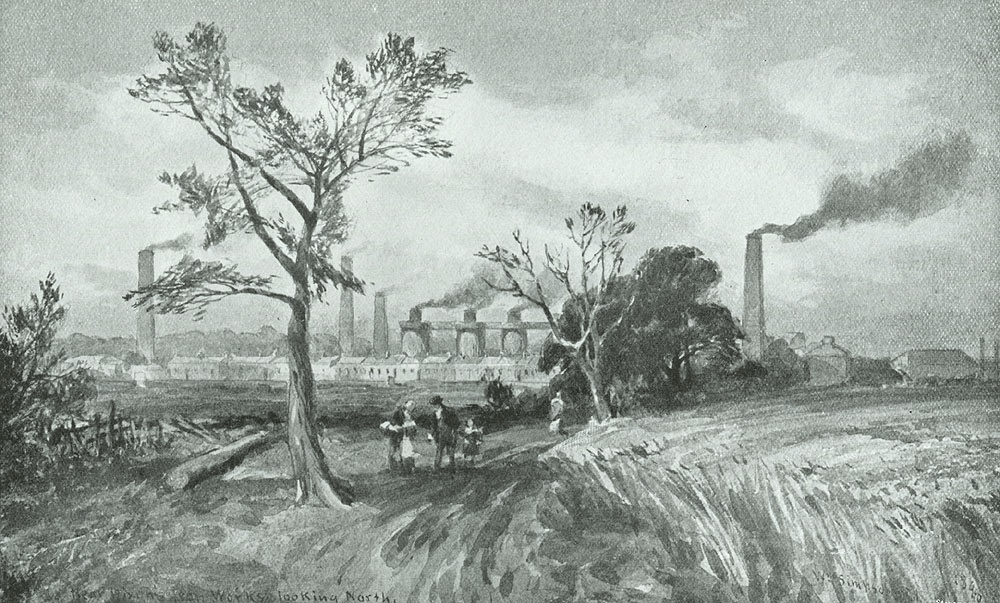
We also see on the 1841 census Robert was a Iron Puddler, the image below is of Govan Iron Works looking North, drawn by William Simpson in the late 1840s.
The next record I have for Robert is in 1845 when he married Mary Ann Reid, also in the Gorbals.
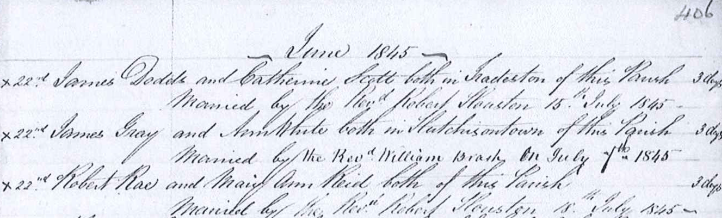
They had their first son, James in 1848 – by then they had moved to Old Monkland, Lanark. Robert followed shortly after in 1850 and then John (my direct link) was born in 1851. In the 1851 census I believe Robert’s sister in law, who is only 10 is living with them. The image below is where Robert would have worked whilst living here.
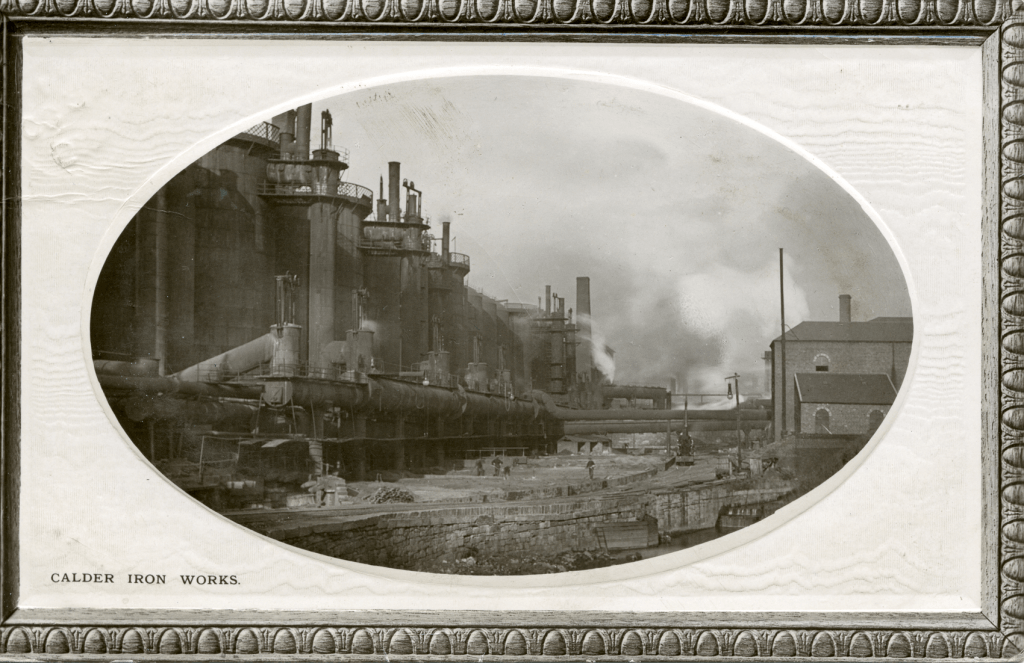
This image is of the Calder Iron Works, Coatbridge seen from across the North Calder Water around 1900. Built around 1795 this was the Monklands’ first pig iron works. After David Mushet was made manager in 1800 it was the first ironworks to make use of the local black band ironstone. The works closed in 1921.
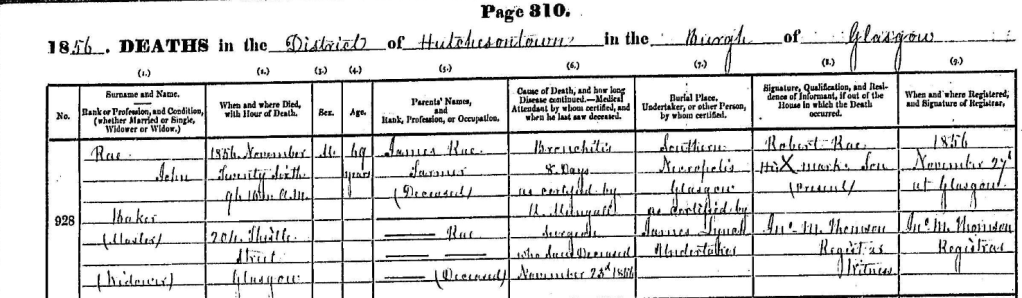
In 1856 Robert lost his father, he was 34 years old and although statistics show early death for bakers his father lived until 69 years old. What I find most upsetting about this record is he had no idea what his grandmother’s name was!
He also lost a son, James, in 1859 from atrophy is. This may have been caused from malnutrition, illness or disease. 1861 They were living at 153 Cathcart Road, Hutchesontown, Govan. Robert had went back to Govan Iron Works and in 1871 they lived in Tradestone with only one child, Robert at home. Robert was 21 and was also a puddler. He would have worked alongside his father.
By 1881 it was only Robert and his wife at home however we learnt in John Rae’s story that he had moved to Bothwell, the census shows that Robert and Mary Ann also moved. Again I can almost guarantee they moved for work and they were both Iron Puddlers.
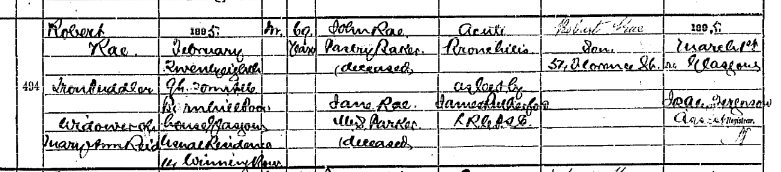
Robert lost his wife in 1890 and unfortunately in 1891 Robert was a 65 unemployed, widow. He did have a lodger which would have been is only income as the ‘Old Age Pension’ was introduced in the UK in January 1909. A pension of 5 shillings per week, or 7 shillings and sixpence for a married couple. This was only payable to a person with an income below £21 a year. The original state pension qualifying age was 70, and was subject to a means test.
In 1895 Robert died in Barnhill Poor House, he would have ended up there as he didn’t have the means to take care of himself when he took ill.
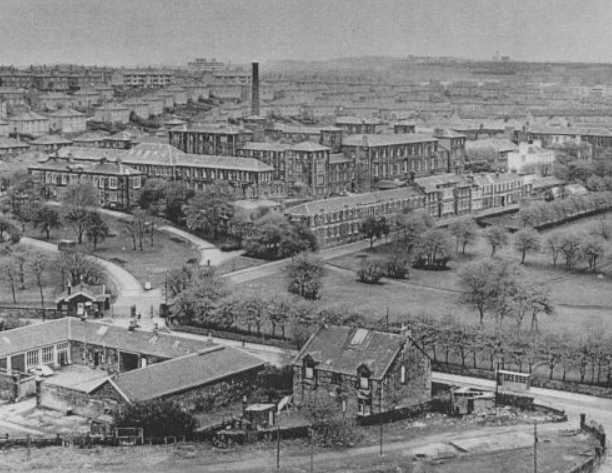
Barony Parish Poor House at Barnhill was opened in 1853 and an adjoining purpose-built hospital was added in 1880. In 1890 the Parish Council was amalgamated with the City Parish, and the poorhouse and the hospital were named Barnhill. By 1905 it was Glasgow’s only poor house and Scotland’s largest, with 2,000 inmates.
Initially indoor relief was reserved for destitute persons, incapacitated by youth, old age, disease (mental or physical) and friendlessness, i.e., they had no one to look after them. By the early 1850s, the poor law authorities began to use the poor house as a ‘test’ and benefits became discriminatory. By the 1870s, women with illegitimate children, or widows with children who might be at risk were only allowed indoor relief in the poor house. Increasingly the poor house was seen as a test and the rules and regulations were designed to make it more irksome than labour ‘without such discipline and restraint, to those who are not truly fit objects of parochial relief’.
Son – John Rae
Wife – Mary McGill Reid
 Marie's Genealogy