3rd Great Grandfather
7th Generation
Born - 1851 - Coatbridge, Lanarkshire, Scotland
Died - 11 December 1915, Queensland, Australia
John was born in a town called Dundyvan in Old Monkland which came under Coatbridge in 1851. His address when only 2 months old was 42 Fells Land which was part of a former industrial village. At the time of his birth he had 2 older brother’s James (aged 3), Robert (aged 1) . His father, also Robert, was a Iron Puddler (Malleable). Puddling was the first successful process for making malleable iron from pig iron. His father would have been working at the local Iron Works, Calder Iron Works.
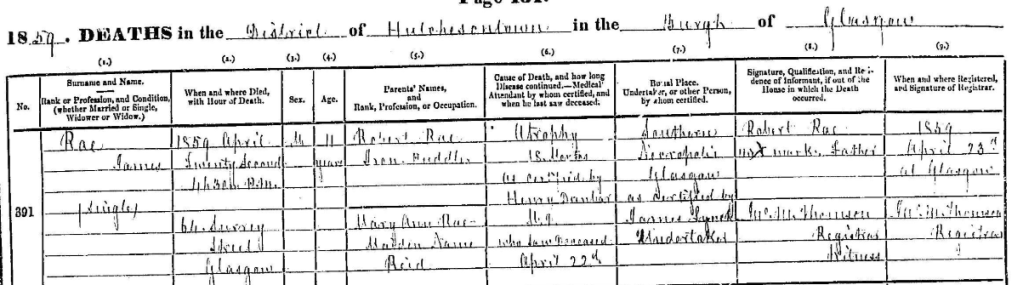
In 1859 they were living in the Gorbals in Glasgow, John lost his eldest brother James here. His death certificate is below – He was only 11 years old. The death certificate doesn’t explain what the cause of atrophy is. It can be a medical condition like osteoporosis or heart disease. It can also be caused from malnutrition, illness or disease. It was not always seen as life threatening sadly for James it was. It gives you a grim insight into the poverty they lived in. By 1861, the next census, they have moved to 153 Cathcart Road, still part of the Gorbals.
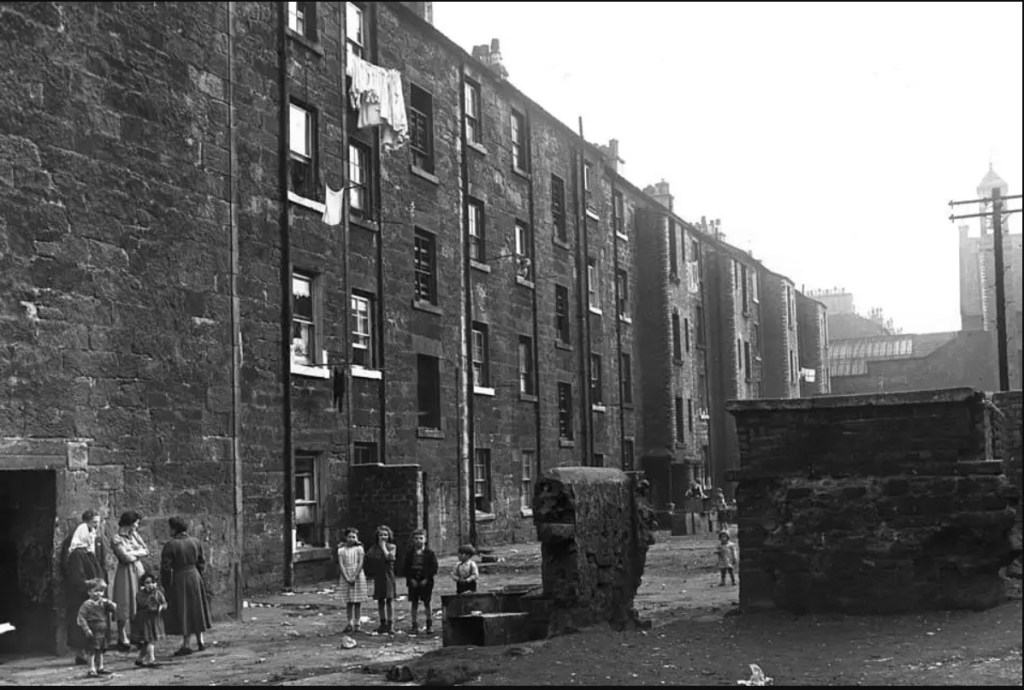
The Gorbals village hugged Main Street (renamed Gorbals Street) until the 1790s, but the area was soon transformed by the construction of huge numbers of factories and tenements. Waves of impoverished Highlanders, Irish, Jews and then Lithuanians arrived during the 19th century, and slums conditions prevailed for many. The Gorbals tenements were then built quickly and cheaply in the 1840s, providing housing for Glasgow’s burgeoning population of industrial workers. This is the type of building that John and his family were living in, and that James died in. (Photo below)
Legend has it that the Gorbals can be traced back to the Leper Hospital that once stood in the area in the 15th to 18th centuries. According to the story, lepers would ring a bell situated on the stone bridge (built in 1343 by Bishop Rae – now would’nt that be something if they were related!!) separating the village from the town of Glasgow, to advise the population of their entry into the town. Such bells were believed to be called ‘gory-bells’ – providing the foundation for the ‘The Gorbals’ which we know today. Another theory suggests that those of a charitable nature in Glasgow used to gift food to the lepers on a daily basis, and would leave the food on the bridge that ran over the river – ringing the bell to let the lepers know they should come collect it.
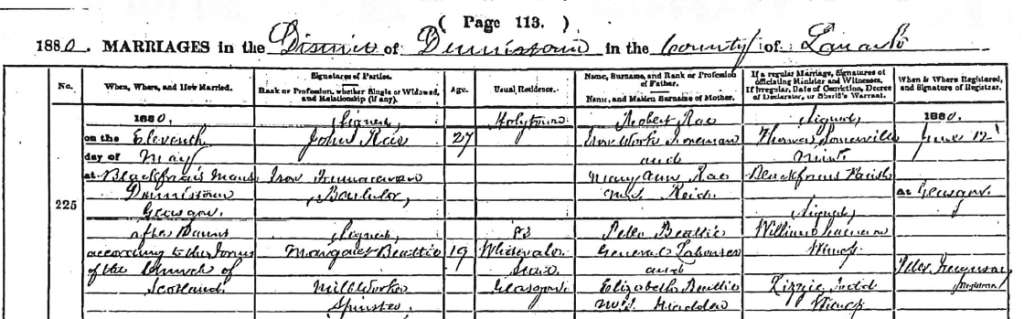
John was 27 when he married Margaret Beattie on 11th May 1880. They were married in the Manse (the residence of a clergyman, usually a Presbyterian minister). John had followed his fathers footsteps into the Iron Works and Margaret was a Mill Worker. Dennistoun is not far from the Gorbals but living conditions were definitely an improvement from his childhood.
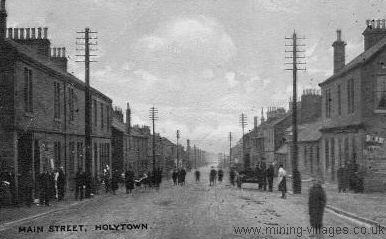
Within a year of them being married they had moved to Holytown, Bothwell and had their first child, Elizabeth.
The life expencatcy if a pudler was only 30 years due to The strenuous labour, heat and fumes!
The Monkland Iron and Steel Company have extensive works near Holy town, in which are three blast-furnaces, making together about 1440 tons of pig-iron monthly, and six others producing 2880 tons : in the same establishment are mills and forges in which 400 tons of malleable iron are manufactured weekly. In the company’s works more than 2400 persons, including miners, are constantly employed
In the 1891 The family had moved to 101 East Nelson Street and had 6 children. By 1901 The family had moved again (no 2 records I have for this family are the same address) John was now 49 years old and they were living in Camlachie. Their family was complete with 11 children living at home – Elizabeth, Mary Ann, Lena, William, John, Violet, Margaret, Florence, Annie, Bartie and Josephine all aged between 20 years and 4 months.
In 1911 John is 59 years old (on the census record – he must be days off his 60th depending on the day the census is taken) and they were living at Stewarton Street in Wishaw. John was a smelter – naturally occurring iron ore was ‘smelted’ into ‘pig iron’ which was cast as ingots (known as ‘pigs’) of hard, brittle iron which would be melted down. This census record also shows he had 14 children, 12 living. They had lost Beatrice before she was 1 year old but I have record of the other 2 children

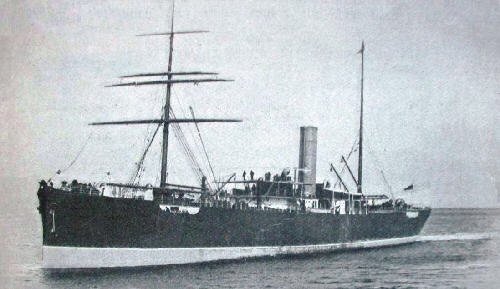
The following year John boards the Perthshire (pictured below) on 28th September 1912. Destination Brisbane, Australia. Margaret and John did not emigrate under any of the work/government scheme, they pay the full fare. I believe it would have been due to their age they wouldn’t be eligible.
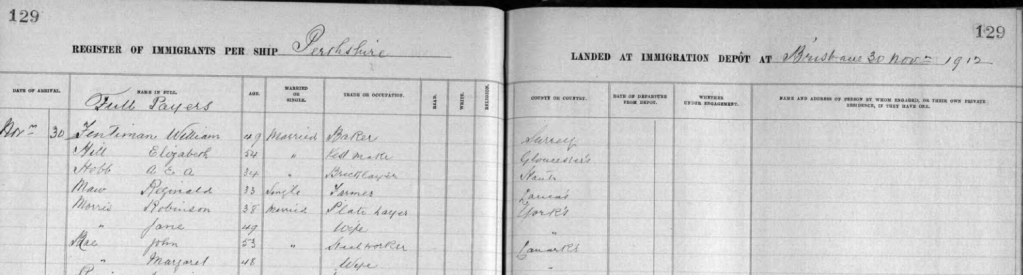
Sadly the last record I have for John Rae is only 3 years later. He took his family to Australia for a better life, but sadly he didn’t get to enjoy watching them grow.
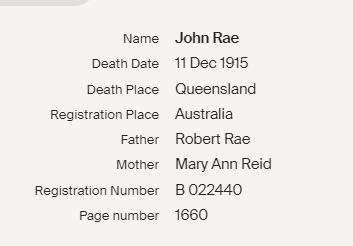
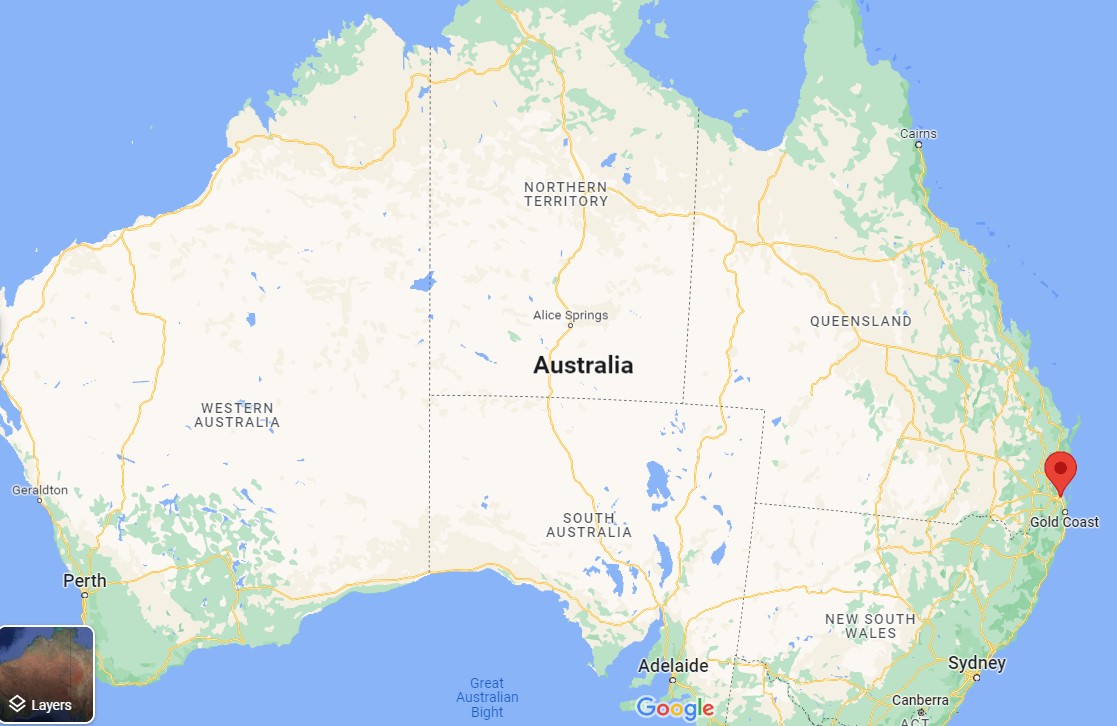
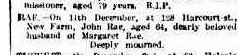
John is buried in Toowong Cemetery, also known as the Brisbane General Cemetery, is a heritage listed cemetery located four and a half kilometres west of Brisbane.
It was established in 1866 and formally opened in 1875. It is Queensland’s largest cemetery.
Father – Robert Rae
Mother – Mary McGill Reid
 Marie's Genealogy